Glasgow World Championships: your essential guide to all the track cycling events
Confused by the omnium? Bemused by the keirin? Here's Cycling Weekly's essential guide to track cycling disciplines

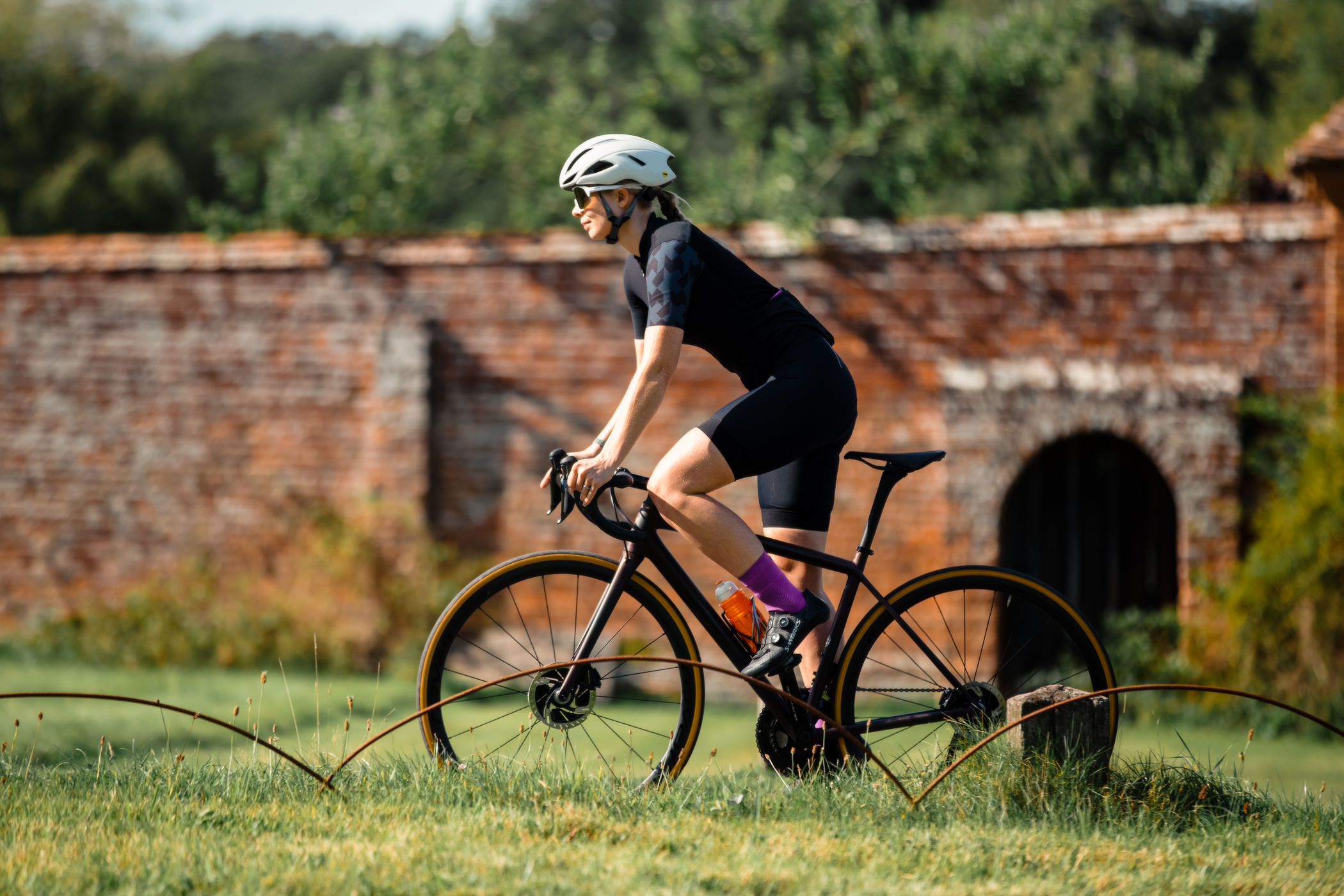
No brakes, no gears - track cycling is a discipline blessed with a beautiful simplicity. Or, is it?
Whilst the bikes might seem uncomplicated (until you've spent hours trackside debating gear inches), the competitions played out on the boards of a velodrome can be a bit more complicated than "first to the line wins."
We've put together a guide to track racing, to help explain the various races you can expect to see at the Glasgow World Championships.
Team pursuit

The team pursuit has four riders cover a distance of four kilometres, which is 16 laps of the track. They have to ride as a unit to give each other enough shelter to recover while not on the front.
The qualifying rounds see teams ride the usual distance but they are the only ones on the track. Whereas, after the qualifying, two teams start at the same time on opposite sides of the track with the winners being the ones who post the fastest time.
The time is taken from the third rider to cross the line, therefore it is common for the fourth rider to give his or her all and then swing off with around a lap to go. This would usually be the rider who gets the team up to speed from the start.
Riders line up next to each other on the pursuit lines on the home and back straights with the first rider in the lowest position. The lowest rider starts in a start gate too with the other riders being held by mechanics or coaches. The first rider's job is to get the riders up to speed and over their gear. This usually takes just over a lap.
Get The Leadout Newsletter
The latest race content, interviews, features, reviews and expert buying guides, direct to your inbox!
After this, the riders will take around one lap on the front of the train before swinging up the track, usually on a corner so they can use the banking to not lose speed but naturally drop to the back of the group due to them riding further. These have to be perfectly executed. If a rider misses the slipstream of the last man in the train it can cause all kinds of problems with riders having to spend a lot of energy to get back to their team-mate's wheel, throwing the entire setup out of balance.
There are points where one team can catch the other on the track. If this is the case then the caught team must get out of the way of the faster team as they continue to try and set the fastest time possible. If it is a race for a medal, if a team is caught the race is over and is usually referred to as 'making the catch'.
A pursuit bike is a standard frame typically ridden with front and rear discs (on an indoor velodrome) and tri-bars. Gearing is typically between 104 -120 inches.
The world records are currently held by Italy in the men's race and Germany in the women's.
Omnium

The Omnium is a competition made up of aggregated results from a series of four race, all held on the same day.
The one-day format, which also no longer includes the timed events (individual pursuit, flying lap and kilo / 500m time trials) is relatively new, having been changed after the 2016 Rio Olympics.
It is far more endurance-focused, including the scratch, tempo, elimination and points race.
Riders accumulate points as they race, with the winner in each race awarded 40 points, 38 for second place, 36 for third - and so on. The points race comes last, and there are double points for the final sprint. The rider with the most points after four events wins.
Here's how those four races work:
Tempo race
This bunch race features a sprint on every lap after the first four – the first rider over the line wins a point, and any rider who laps the field gains 20. Losing a lap to the main field sees a rider lose 20 points. The World Championship tempo race is run over 10km for men and 7.5km for women.
Scratch race
On the face of it, pure and simple - first rider over the line wins. Some riders may aim to break away and lap the field, whilst other will hold out for a sprint. The men race 15km and the women 10km.
Elimination race
Often called the "Devil Take the Hindmost", or the Devil for short, in this race there is a sprint every two laps. The last rider over the line is eliminated until the final lap where the remaining riders fight it out for victory.
Points race
A long one – 25km for men and 20km for women, but the distance varies at other events. Every ten laps, there is an intermediate sprint. The top four riders score points - 5 for the win, 3, 2, and 1. The last sprint is awarded double points. Lapping the field gains a rider 20 points.
Sprint

Matche sprints are contested between two riders who cover three laps of the track. The first rider over the line wins the race, best of three races wins the match. The top 16 riders qualify for the knockout stages with a flying 200-metre time trial.
Tactics play a huge part in the sprint racing. Track stands – where the riders come to a standstill in a bid to get their rival to the front to lead out the sprint – are common, as are sudden turns of speed.
Team sprint
The team sprint sees a team of three riders race against each other over three laps of the track. The first rider gets the trio out of the start gate and up to speed before peeling off after a lap.
The leading rider must complete a lap and swing up in a designated zone 15 metres on either side of the finish line. The second rider takes over the pace for the middle lap before the third rider finishes off.
The quickest team over the three laps wins. One false start is allowed but the team must get away cleanly at the second attempt. The women's team sprint has pairs of competitors racing.
Keirin

The keirin heralds from Japan, where professional keirin racing is the equivalent of horse racing, drawing in huge crowds to gamble on the outcome.
The common misconception is that keirin means to fight – actually it means ‘racing wheels’.
It's a race for the sprinters. The riders line up side-by-side on the pursuit line and jump in behind a motorised pace bike, commonly called a derny, as it comes past. The riders’ starting position is determined by drawing lots beforehand. Position number one is at the bottom of the track and that rider should take the spot directly behind the pacer unless another rider beats them to it.
The riders will sometimes jockey for the position they want behind the pacer, and it’s common to see a few nudges between riders as they fight for the best wheel to follow. What they mustn’t do is pass the derny that slowly builds its speed (the pace bike rider judges the speed through his pedalling cadence) to 50kph for the men, 45kph for the women. With two-and-a-half laps to go the pacer swings down off the track and the sprint begins.
From here riders will use a variety of tactics; leading from the front, sitting in the wheels, or leaving it late with a burst of speed.
Sir Chris Hoy told us: "Tactics will depend on the type of race it is. Sometimes it will be a flat-out sprint for two and a half laps, while other times there’ll be a bit of hesitation, but no more than half a lap of waiting before the first rider will go for it.
“If you hit it the front hard, with a lap and a half to go, then not many folks will get round you. It’s about timing your attack correctly and holding on to the line. You have a plan A, and a plan B if they don’t work you ride on instinct and react to the situation around you.”
Madison

Mark Cavendish and Elia Viviani battling for gold at Rio 2016 Olympics
The Madison has long been considered the most complex but absorbing race on the track.
Named after Madison Square Garden in New York where it was first made popular. Teams of two riders compete together to score points at the intermediate sprints, held every 20 laps, (5pts, 3pts, 2pts, 1pt to the first four), and gain laps by attacking.
One member of each team is ‘in the race' at any one time, while the other circles at the top of the banking. The riders switch over to give each other a rest - or perhaps to put the better sprinter in as a sprint lap approaches.
The rider must touch his team-mate to change over but usually this is done with a hand-sling to propel the other into the race. The team that covers the most laps wins, with points only counting to separate riders who finish on the same number of laps.
Time trials (men 1km, women 500m)

The simplest, purest track race - which makes it all the more baffling why the UCI decided to eliminate it from the Olympic programme in 2016 when asked to drop an event to make way for BMX.
The time trials continue at World Cup and World Championship events but with the sprinters focusing on the sprint and Keirin races - which are Olympic disciplines - instead, it's lost its lustre. The riders start individually and the quickest rider over one kilometre (men) and 500 metres (women) is the winner.
Individual pursuit

The men race over 4,000 metres, women over 3,000. In qualifying each rider covers the distance alone and is timed – very much like a time trial. The best finishers are then seeded and take part in a knock-out for the medals, starting on opposite sides of the track.
The fastest two riders compete for gold, the third and fourth quickest go for bronze. If one rider catches another, he or she is automatically the winner, otherwise results are decided by times.

Thank you for reading 20 articles this month* Join now for unlimited access
Enjoy your first month for just £1 / $1 / €1
*Read 5 free articles per month without a subscription
Join now for unlimited access
Try first month for just £1 / $1 / €1
Michelle Arthurs-Brennan the Editor of Cycling Weekly website. An NCTJ qualified traditional journalist by trade, Michelle began her career working for local newspapers. She's worked within the cycling industry since 2012, and joined the Cycling Weekly team in 2017, having previously been Editor at Total Women's Cycling. Prior to welcoming her daughter in 2022, Michelle raced on the road, track, and in time trials, and still rides as much as she can - albeit a fair proportion indoors, for now.
-
 Trek USCX will host 4 consecutive UCI cyclocross race weekends on US soil
Trek becomes American UCI Cyclocross series title sponsor, adding a fourth race to the series in October at its headquarters in Waterloo, Wisconsin.
By Kristin Jenny Published
-
 Lip service isn't good enough: here's what needs to change for cycling events to actually be inclusive
These are the key actions that make an event actually inclusive and do more than just lip service.
By Marley Blonsky Published

